Selected work / Gilded
Making physical gold easier to manage.
From individual gold bars to enterprise approval chains. I designed the interfaces that help people understand what they own, make a trade and know what happens next.
- Contribution
- Product design · F&F and enterprise experiences
- Status
- Launched product work
In this case study
A financial product with physical detailsSee the portfolio, then the detailMake the commitment clearMake approval a visible handoffBeyond the trading momentA financial product with physical details
Gilded brings physical gold into a digital product. Behind a balance are individual bars, different weights and vault locations. For an enterprise, there is another layer: the person creating a transaction may need someone else to approve it.
My work spanned the F&F experience and enterprise workflows, including holdings, buying and selling, approval rules, onboarding and payee management. The design challenge was to make those details understandable at the moment they mattered: choosing a vault, reviewing the cost of a trade, or deciding which request needed attention.
This case study follows two connected parts of that work: making ownership tangible, and making responsibility clear.
See the portfolio, then the detail
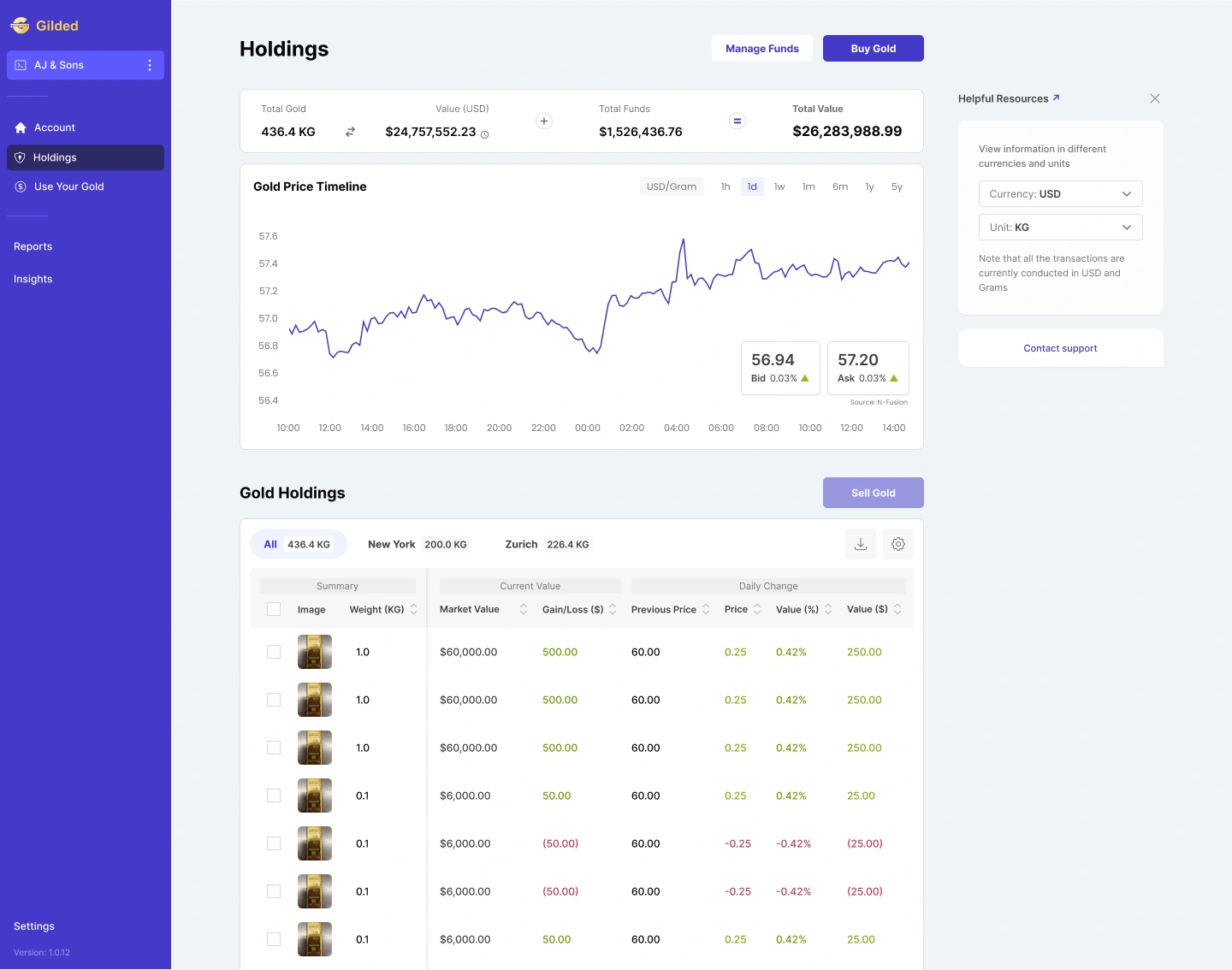
The holdings screen above moves from an overall picture to individual assets. Total gold, its value and available funds sit together at the top. The price timeline provides market context before the user reaches the holdings table.
Within that table, vault tabs let someone move between all holdings and a specific location. Bar imagery, weight, value and daily change keep the physical asset visible alongside the financial information. The hierarchy supports both a quick check of the account and a closer look at what is available to sell.
Currency and unit preferences sit in a separate panel, with a note explaining the units used for transactions. That distinction matters when someone views a portfolio one way but transacts in another.
Make the commitment clear
The buying journey separates an immediate purchase from a scheduled order before asking for transaction details. Timing changes what the user is committing to, so it belongs at the start of the decision.
A quantity is also a set of bars.
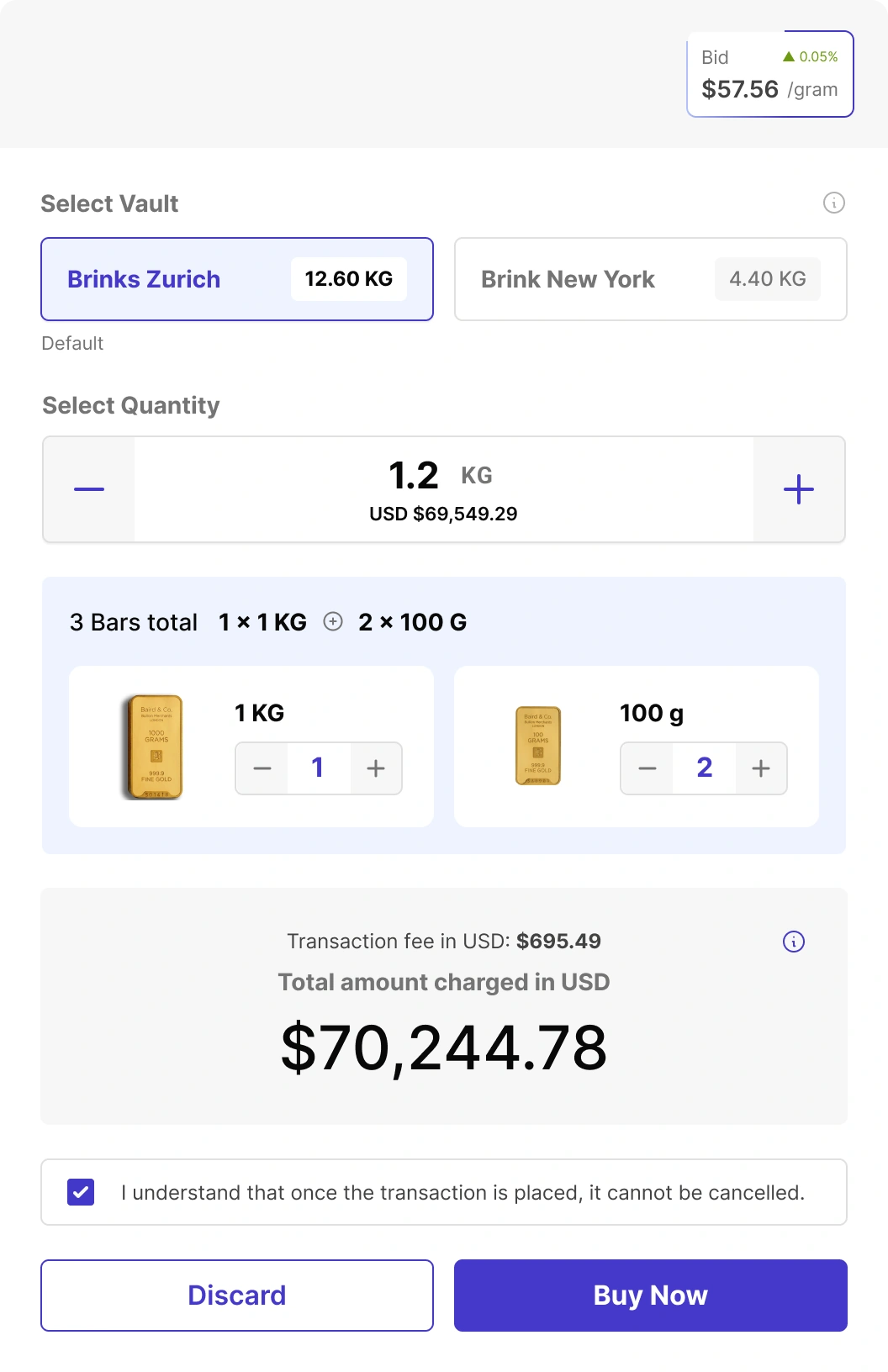
In the F&F live-buy flow, selecting a vault and quantity leads to a concrete breakdown. Here, 1.2 kg becomes one 1 kg bar and two 100 g bars. The interface connects the amount entered to the physical assets being purchased.
Review the total before acting.
The transaction fee and total charge stay together above the action. An explicit acknowledgement explains that the purchase cannot be cancelled once placed. The final step keeps the cost and consequence in view.
Make approval a visible handoff
In the enterprise product, submitting an order can start a team workflow. The trade needs to communicate that approval is still required, and the approver needs a clear place to pick it up.
I separated the inbox into requests awaiting the current user, requests awaiting other approvers, and an archive. This makes the difference between “I need to act” and “I am waiting” part of the navigation.
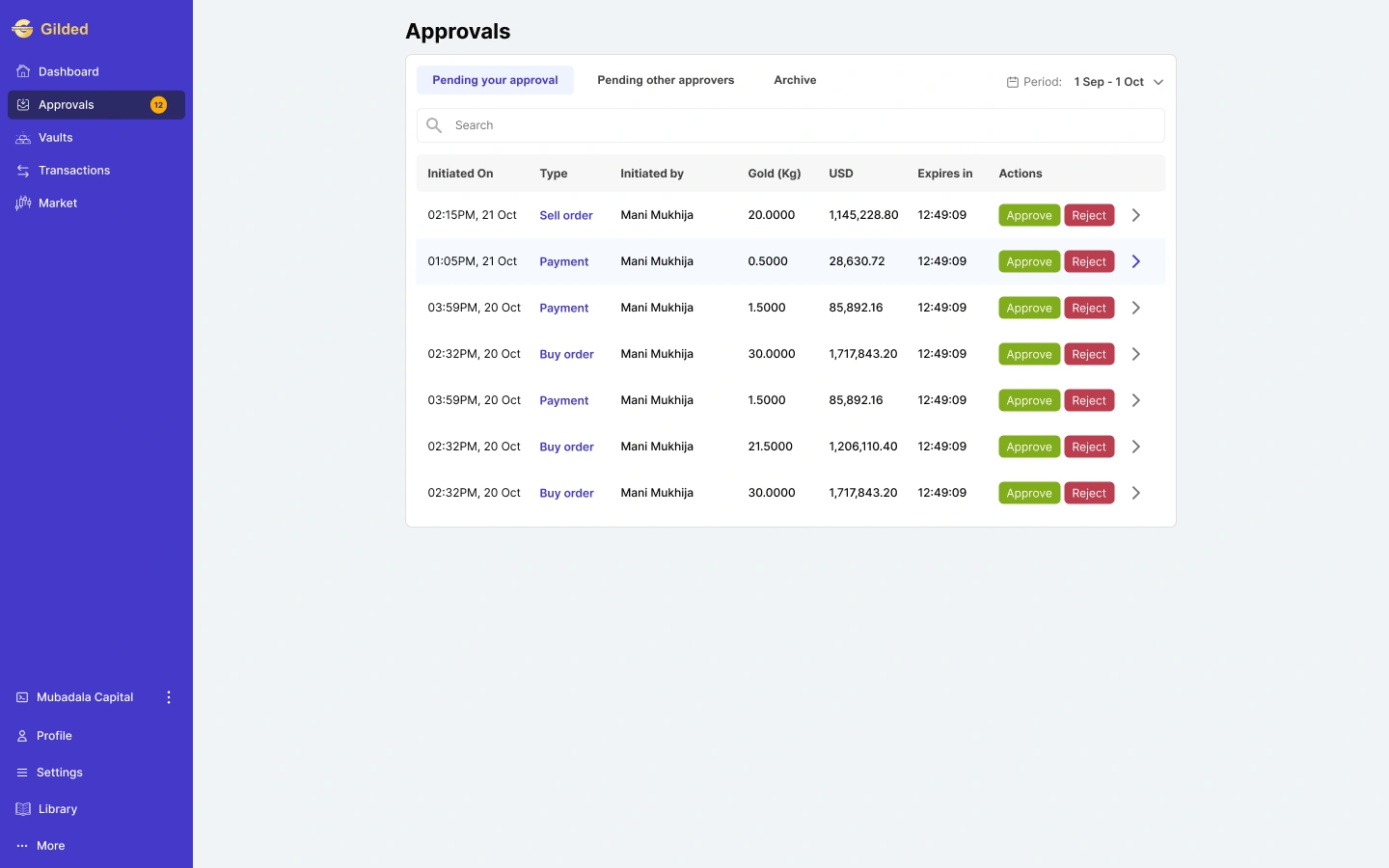
Each request brings its type, initiator, gold quantity, value and expiry into one row. A detail view supports closer inspection. The inbox gives the person reviewing the transaction both an action and the context for it.
Different teams need different rules.
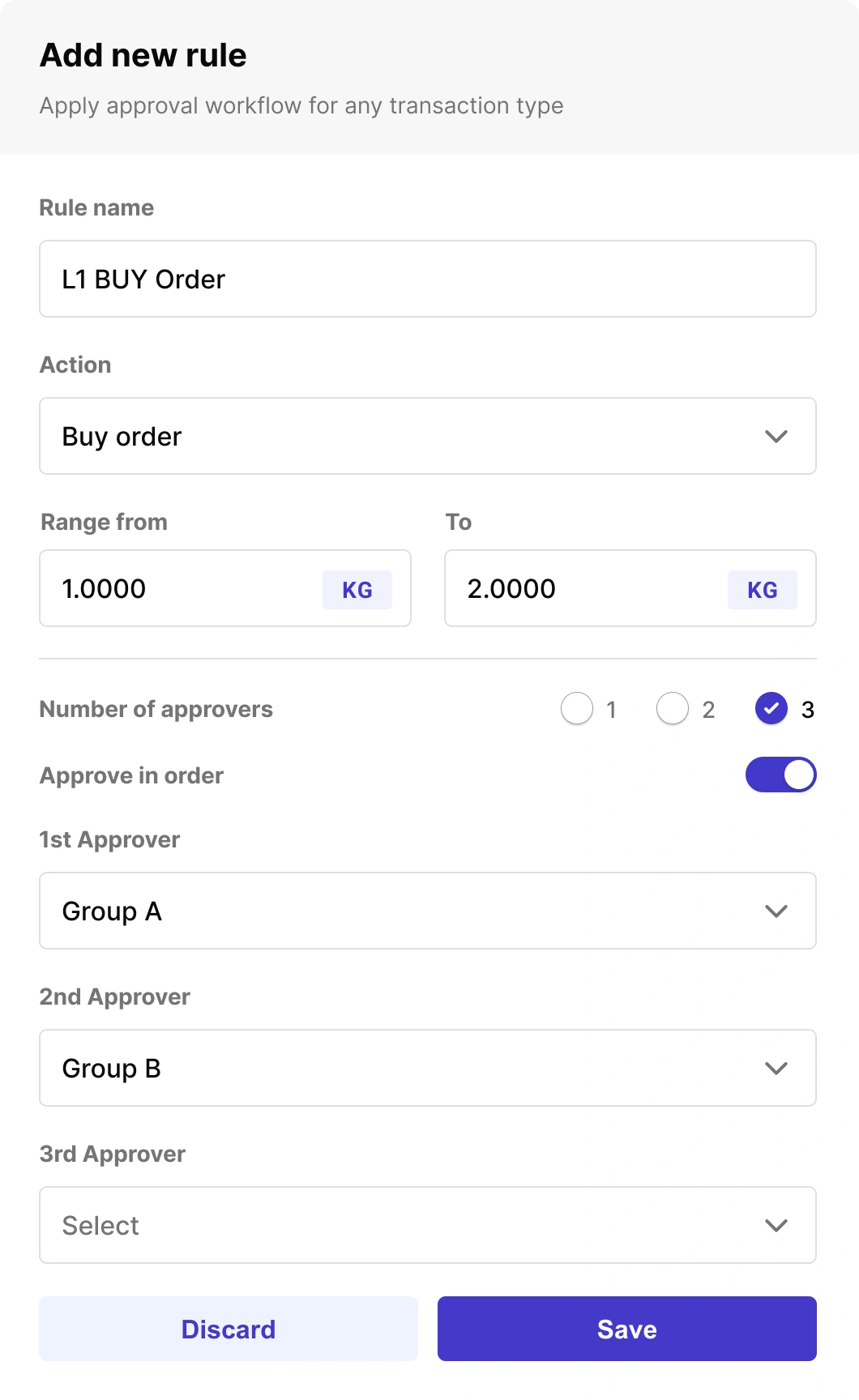
Approval setup ties a transaction type and quantity range to the people responsible for it. Teams can define how many approvers are required and whether they must act in sequence.
When ordering is enabled, the form exposes the first, second and third approver positions. That makes the sequence explicit during setup, before a real transaction depends on it.
The configuration and inbox solve different parts of the same problem: setting the responsibility, then making the next action clear.
Beyond the trading moment
The wider work included corporate onboarding and bulk-payee management: the setup and operational tasks that surround a transaction. I approached these as connected parts of the product, alongside the trading and approval experiences shown here.
This work launched. A separate companion-app exploration remained unlaunched and is outside the scope of this case study.
“His deep knowledge of financial systems, his experience of how these systems vary across geographies, and his creativity in translating all of that into visual and interaction design artifacts, make him an extremely valuable resource for any fintech, crypto, or blockchain project.”